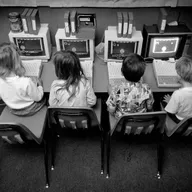
The Classroom/Technology Pipeline
OTM producer, Molly Rosen, has been on a mission to find out what technology her two-year-old kid will confront when he’s old enough to go to school. In a recent interview she did with a New Yorker staff writer, Jessica Winter, about how AI chatbots are infiltrating schools, Molly learned about the time Jessica's sixth grader had brought home a new Google Chromebook from school, pre-installed with Google’s Gemini suite of AI tools.
JESSICA WINTER: If she opened up a Google Doc to write an essay, she would receive prompts asking her if she wanted some help. If she opened the app where she creates graphic design and posters, that now had prompts for “Beautify this slide” or “Make this look better.” I immediately thought, “Well, we’ll just turn them off,” but we couldn’t. We couldn’t turn them off. You needed administrative privileges to turn them off, so she just kept dismissing the prompts, and they kept coming up again.
So that’s where we are today. But the reason that Google Chromebooks are in classrooms in the first place is part of a longer influencing campaign that started back in the 1980s. This week, Molly spoke to Natasha Singer who covered tech in schools for The New York Times for more than a decade. She lays out the history of how big tech got into schools in her new book, Coding Kids: Big Tech’s Battle to Remake Public Schools.